Friday, January 6, 2012
Smartest Machine on Earth
What is "machine learning"?
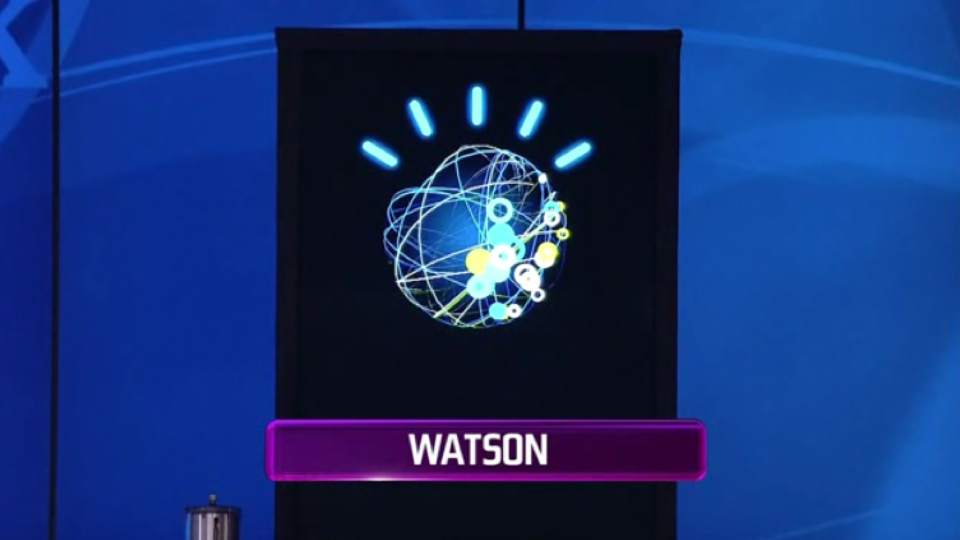
"Machine learning" is a branch of artificial intelligence that is concerned with the study of computer algorithms that improve automatically through experience. Watson by IBM uses "machine learning" in order to answer the Jeopardy questions without ever hearing the question before.
How did the IBM team employ that concept in the development of Watson's AI? What advantage did that provide over previous attempts at "intelligence"?
IBM employed the concept of "machine learning" in the development of Watson's AI by feeding Watson thousands of previous Jeopardy questions. They also fed Watson different forms of the same thing, for example the letter A. The letter can have many different forms and shapes. Instead of letters, Watson is fed different forms of questions, Watson is better equipped to answer a question asked because it can reference the way something is worded, allowing Watson to imply things if needed. With all of the references that IBM has supplied Watson with, Watson is able to access all the information searching for information that relates to the question. It then "weeds out" the least likely, leaving the most likely answer choice. The Artificial Intelligence allows Watson to better find the most likely answer and learn from its mistakes. Watson is able to listen to the answers of his opponents and learn from the way they answered, whether it is right or wrong, and how they answered. In the video, a question is asked about what month a certain holiday is in. Watson answered that the holiday stated was a holiday. An opponent answered the question as a month, getting it correct. After hereing the same style of answer for times in a row, Watson was able to answer the next question, which was the same style, correctly. The "intellegence" that Watson has been given and allowed to build on makes Watson able to gain more information and intellegence the more it answers questions and hears questions answered. Watson has taken AI to the next level because up till now, no other technology could produce a machine anywhere near Watson.
I've often mentioned the term "Empirical Scepticism". What does that mean? How does that relate to the concept of Machine Learning? How does this relate to your life?
"Empirical Scepticism" is an attitude of doubt or a disposition to incredulity either in general or toward a particular object based on observation and/or experience. This relates to Machine Learning because Machine Learning is learning based off of previous information/experience. This relates to our lives because we live from experience, whether it is our own experience or other's.
Wednesday, January 4, 2012
Engineering Ground Zero
What different "trades" (types of construction work) are featured in this video? Name at least three.
1. Concrete
2. Landscape
3. Glass work
4. Piping
5. Steel
6. Electrical
7. Stone work
8. Coating
9. Thermal insulation
10. Firefighting facilities
11. Water facilities
What aspect of the project is most interesting to you? Why is that?
All of the ideas and innovations were interesting and inspiring. I found that the thoughts behind all of the work was very miticulous and new. Every aspect of the work being done rivaled each other for greatness, emotionally as well as in an innivative sense. The memmorial itself was an amazing idea, especially since it spoke to those effected and those who witnessed the event as well as everyone else. The building that is to the World Trade Center has, I believe, a very unique and tranquil design. The overall atmosphere of the environment pays great tribute to those who lost their life in the tragic attack. It seemed that everyone working on the site was giving their all for the cause. In other words, all aspects of the project were interesting to me because the reasons for the project had much meaning and the engineering that was used was innovative and impressive.
Friday, November 11, 2011
Professional Interview
Professional Background
a. Interviewee name: Ricardo Bazan
b. Interviewee’s specific degree: Bachelor Degree of Civil Engineer
c. Interviewee’s place of employment: self-employed, Banell Development
d. Interviewee’s email address: rbazan@banelldevelopment.com
Professional Interview
· Please describe your engineering field.
"Civil Engineering is the study of nature and how the humans, persons want to change that to put some buildings or infrastructures to serve the people. And along the way, how to make it safe, how you are going to influence nature, the land and the environment, how you are going to contain it if you need to. For example dams, culverts, or bridges, stuff like that. It is pretty broad."
· How long have you been doing this?
"About 10 years."
· What is your current job title?
"Civil Engineer."
· Please describe your particular job and duties.
"Right now it varies a lot as I am more self-employed now, I have to do everything really. So that means i have to do the engineering portion of it, like designing, like doing plans, drafting plans and stuff like that, and also doing manager duties. And also getting clients. So I have to do marketing, I have to do marketing (going out there meeting people, going to seminars). So its pretty broad now. A civil engineer can have a specific job. Most of the engineers are in design, or construction, or consulting. So, previously, my previous job, for example was basically all design. So, stay at the office and go through plans and design plans and prepare plans, but never actually went out to the field. Not supervising the construction process because that will be the job of another engineer, a field engineer. Civil engineer is very broad, sometimes you don't specialize in a lot of things."
· What is your average work schedule?
"Now I have a lot more flexible time, but I would say it starts around 9 o'clock in the morning and it can end probably 8 o'clock at night. Some days it starts at 10 in the morning and end, you know like, at 3 o'clock, 3 PM, depending on the day. If you get really busy, you work Saturdays and Sundays. For example, today is Friday and I'm drafting a plan, and I'm planning to do so after this meeting and its Friday night, you known, probably tomorrow I'm going to do the same thing. So it really depends."
· Starting with high school, describe your educational background chronologically.
"In high school, I did just regular high school stuff, like, umm, I always went well with the math. You know, obviously for engineering you have to do math a lot. Pre-calculus, and then calculus and then went to college and doing all the calculus and all the engineering work, physics, chemistry, biology ... what else is out there... ya, so, and then after college, that was it and then you graduate, well in college, obviously beside the core courses that I just talk about, you do the civil engineering classes. The basic stuff is, umm... surveying, class of surveying, a class of basic transportation, basic structural design, basic soil, soil is engineering, chemical engineering, water resources, hydrology, stuff like that. But then for me I specialized on transportation and water resources. Transportation we had to do a bunch of class on traffic and road design. So there's two different things, traffic is one thing, transportation is one thing [...] traffic is part of transportation but it is not the same thing. And the water resources is pretty broad also, you have to ... water resources has hydrology, which is is basically rain water and how you convey that in culverts and rivers and stuff like that, including dams. And then hydrology [hydraulics] is actually the physics of the water going over a certain infrastructure like pipes, and over a dam, or inside a channel, that's hydrology. So that's my expertise, hydrology, hydraulics, and transportation."
· If you had it to do over, related to your career or education, would you do anything differently?
"I think I would do it the same, the only thing, umm... probably I'll try to, maybe, if I had had the chance, I didn't really, is jump almost immediately after the bachelor go into a masters degree of some sort. But sometimes you are either not sure which masters you want to take, you know, when you graduate. You just did your bachelor, it is really a broad view of the whole engineering and it really doesn't specialize you in anything until actually you hit the work place. And I think if I had to do it again I would probably do the same thing. Just hit the work place, work for a couple years and then do the masters."
· And now, at this point of your career, would you know exactly, if you were going to do you masters, do you know what you would go towards?
"Ya, actually, the masters, umm.. the funny thing is that, engineering is really good,umm... you can master it, the field that your in, in civil engineer for example water resources, just with work experience, you would master it. But civil engineering only takes you up to a point in the world business of the... so if i would do the master, actually I would to the MBA now instead of civil engineer master. The reason for that is that, umm... an engineer you move up the ladder, but it's extremely important once you hit a certain level after a few years of going up the ladder, a civil engineer, you start managing projects more, people more, business more. And none of that you have studied, you not ready because school you don't study any of that in the civil engineering profession, so an you only learn it at work, but sometimes, like engineering, you need the fundamentals, and that you get from school."
· What advice would you give to me as someone interested in pursuing a career path similar to yours?
"If you like it, if you like the observing a lot of the natural occurrences of the world, if you like making a difference, umm... infrastructure for people for safety, I would advise you to go into it. But as far as advice you need to be dedicated, dedicated all the time, like I said, going to school to pursue engineering is difficult, it's not easy. And it's not the difficult as far as brain wise, but you have to be dedicated like study all the time, you know, sometimes you have a weekend were you go just study, you do homework instead of cram for exams for example. So you have to be dedicated. It's rewarding because you known that once you work and do things, you know that their going to be built and you see them and you can tell your friends, 'I designed that,' or I know how everything works around here, which is really cool."
·What college did you go to?
"San Jose State." Majored in Civil Engineering. No minors.
Words of Advice
- Since he owns his own business, Mr. Bazan stated that "At first your everything" and you learn that you "have to delegate" work.
- He cautioned, "Don't be afraid of taking the long road."
- "Everything will click together" so just give it time
- "Double check everything."
Personal Reflection
a. What surprised you the most about the interview?
What surprised me was the concept of hydrology. I had no idea that it was so complex and present in everyday life to the extent that it is.
b. What was the most important piece of information that you learned from the interview?
All the information I learned from speaking with Mr. Bazan were all important in their own light. He may not have mentioned anything to this fact, but what he told me made me realize that the little things in life are superfluous to the bigger picture. The stress that may come out of work and other things are part of the road taken to success and reward. If you take school seriously and stay dedicated, you will come out with knowledge that will help you in many aspects of your life.
c. How has this interview influenced your feelings about your future career?
I believe that my feelings about my future career have been reinforced. All the information I have received from Mr. Bazan has increased my want to join the engineering field. It may not be easy, but it seems like a small price for the reward of success you earn. I believe that living life the easy way takes away from living.
Wednesday, November 9, 2011
Engineering Pranksters Wanted!
Engineering Pranksters Wanted! Seeking Ideas for Fun, New Cubicle Toys | |
Easier than 1 -2 -3!
Click Here to Enter Now! (Link to Sign Up) | |
Enter for a chance to win a Dell workstation with professional AMD FirePro graphics. - Marshmallow-shooting rocket launchers? - Gumball-tossing catapults? - Paperclip-throwing cyborgs? - Voice-responsive critters? Show us your design creativity and engineering talent in DE's inaugural design challenge. Submit your ideas for a cubicle toy that's guaranteed to inspire, amuse, amaze, or annoy your coworkers, and you could win a Dell Precision™ Workstation with professional AMD FirePro graphics (retail value estimated at more than $5,000) that's guaranteed to make your coworkers jealous. Sponsored by: | |
Saturday, November 5, 2011
"If Today Were the Last Day of My Life...
? - What three things from this talk resonate deepest with you? List each of these and give a brief explanation of why they are meaningful to you.
1. Connecting the Dots - This resounded deeply to me because life is made up of events that come together at the end. Everything we do leads to something we may not have expected. Life is full of surprises, but some of those surprises could be the result of choices you have made previously in your life. As a teenager, life is still a new experience. I am learning everyday about practically everything. All of the choices I make now lead to what my life will be like in 5, 10, 20 years. And by that time, I will have made more choices that will affect the rest of my life. Trusting that the dots will connect together is hard. Steve Jobs said that you can only connect the dots in the past, the future is unknown. "... believing that the dots will connect down the road, will give you the confidence to follow your heart even when it leads you off the well-worn path, and that will make all the difference."
2. "If today were the last day of my life, would I want to do what I'm about to do today?" - You may not know it, but when you wake up, you are setting the pace for the rest of the day. The mood your in and the way you act are based on how you are in the morning. Steve Jobs said he asked himself every morning, "If today were the last day of my life, would I want to do what I'm about to do today?" This had meaning to me because this question is essential to knowing if you are living you life the way you want to. If your answer is no, then something in your life needs to be changes because that means you are not living the way you want to. Since I have not found what exactly I want to do, or love to do. So, going back to connecting the dots, my choices now will lead to how my life will be, I want to make sure my choices will lead to a positive future.
3. Find what you love to do, have courage to follow your heart, don't settle - Connecting the dots and the quote from response #2 both play a big part in my response to these thoughts from Steve Jobs' commencement speech. Personally, I want to live life to the fullest. I want to find what I love to do and pursue it. Also, I want to have the courage to follow my heart. I know my heart will lead me where I want to go, but first I have to trust it to connect the dots later in my life. Once I do that, my life will be filled with what I love and who I love. Not settling, I believe, plays a huge part in how we live our lives. When we start excepting things we never really want to, we start to lose our way and live the life we never wanted to. Not settling leads to following your heart, which leads to doing what you love.
All of the comments and ideas conveyed in Steve Jobs' commencement speech to Standford University were truly stellar. He gave many words of wisdom and was inspirational. Steve Jobs was truly an inspiration and one of the most premier innovators of the world. Thank you Mr. Steve Jobs for your innovation, inspiration, and wisdom. You will be missed and remembered.
Wednesday, November 2, 2011
Energy Sources!
Here are the slide to me PowerPoint Presentation on Solar Power
1. Describe one thing that surprised you about the energy source that you researched and presented.
What surprised me about Solar Power is that it storing the energy was somewhat hard. I know that using it and transfering it to a power grid is easy, but storingit is not as easy.
2. Describe one thing that surprised you about an energy source that another team presented.
Hydropower energy source surprised me. I hade no idea that it had so many negative environmental impacts. I thought it would be one of the safe, less harmful energysources.
3. Describe and defend what you believe to be the most important technological need regarding energy.
I believe that Solar Power is an important and safe way to collect energy. It is, according to the information I have found out about energy sources, the safest way to collect energy. Although storing solar power is somewhat challenging, it is a small challenge to overcome to provide a safe and clean energy source.
Happy Halloween!
Happy Halloween!
In spirit of Halloween, I have created a famous face from the movies, Jack Scarrington, on AutoDest Inventor.
I also tried to make it more pumpkin like. So here is Jack Scarrington's head, with a pumpkin stem.
Hope everyone had a fun, safe, chocolate (or candy) filled Halloween!!
In spirit of Halloween, I have created a famous face from the movies, Jack Scarrington, on AutoDest Inventor.
I also tried to make it more pumpkin like. So here is Jack Scarrington's head, with a pumpkin stem.
Hope everyone had a fun, safe, chocolate (or candy) filled Halloween!!
Subscribe to:
Posts (Atom)