Thursday, May 31, 2012

Capstone - Marble Sorter

What a year it has been! From figuring out peoples weight to building marble sorters, it was a blast! For most of the year I worked with two gentlemen, Drew Findley and Jordan Summers. They have been great to work with and I wish them the best in their futures. While we were creating, we costructed a marble sorter of the ages, after some trials and tribulations. I believe the pictures below help explain... (the caption under the picture describes the picture) 

The starting of something great...

On the road to success... 

 Another angle of the road to success...

Mid-build crisis...

 Renewed hope...

                                                         Mid-build crisis number two...

                                                               Success in the near funture...

A picture of success... yes, it was reached...

A close up view of the final success...

Thank you Mr. Olson for a great year!!!!!!!!!!!!!!!!!!!!!!!!!!!!!!!!!!!!

Saturday, March 10, 2012

Mercedes-Benz

Can you see anything? (other than shrubbry)


As an advertisement for their new F-Cell hydrogen fuel cell powered car, Mercedes undertook a new form of display...none at all. What the video on this link and you will "see" what I mean.

http://autos.yahoo.com/blogs/motoramic/invisible-mercedes-brings-james-bond-technology-life-171557818.html


Wednesday, February 29, 2012

Game Changer


1) What was the “Moneyball”approach that Billy Beane and Peter Brandt applied to the Oakland Athletics 2002 season? Was it an “art” or a “science”? What single statistic did they boil their value consideration down to? (In class research/discussion)

Billy Beane and Peter Brandt took an all new approach to baseball. Instead of looking at the player through scouts and guessing the rise of a star, they looked at the statistics (mainly on base percentage) of each player and built a team that would get on base. The Oakland A's had the smallest amount of money to work with in the MLB, they were a $30 million team while they were up against teams like the Yankees, a $120 million team. By use of "science" the Oakland Athletics became a winning team, eventually breaking the winning streak by winning 20 games in a row.

2) What is the equation used to calculate OBP? (In class research/discussion)

The equation used to calculate OBP (on base percentage) is:
                (Hits + Walks + Hit by Pitch)_________
(At Bats + Walks + Hit by Pitch + Sacrifice Flies)

3) What is design? (In class research/discussion)
The definition of design is an open ended idea. In lueu of that, I have decided to provide a few general definitions. Here they are:
Noun - A plan or drawing produced to show the look and function or workings of a building, garment, or other object before it is built or made.
Verb - Decide upon the look and functioning of (a building, garment, or other object), typically by making a detailed drawing of it.
Synonyms - noun: intention, scheme, draft, project, purpose; verb: plan, project, scheme, intend, draw, sketch.


4) Describe 3 situations where movie characters (intentionally or not) applied a step from the PLTW 12 Step Design Process. Explain both the (a) situation as well as (b) how the step is relevant:

1 - As the scouts were brainstorming to try to chose star players to fill the spots of the three stars they lost, Billy Beane was concerned that the scouts were not focusing on the problem. He continued to try and get the scouts to define the problem and then solve the problem.

2 - As the Oakland A's where gaining a winning team, Billy Beane cut Giambi due to his bad team moral. Along with Giambi, other changes were made in the team line-up as time went on. Beane was exploring possibilities in the team, considering further development of ideas. He used knowledge gained by the Moneyball technique to make his decisions.

3 - Peter Brandt's idea to use the Moneyball tachnique was revolutionary to the world of baseball. Billy Beane saw the possibility of creating a winning team with the small budget he had. This selection of approach was locked into place when Beane and Brandt overroad the ideas of the scouts and put together a team within their budget that had a better chance of winning than before.


5) What is “Leadership”? List the three aspects of leadership that we come up with in class. (In class research/discussion)

The definition of "Leadership" can be worded differently to everyone. Here is one definition. "Leadership" is the act of providing guidance and direction to anyone in need. Someone who has "Leadership" capabilities not only can, but wants to head a group, team, etc. without having to be forced to. Granted some are "forced" into a leadership position, but that does not mean that they are correctly suited for the job.

1 - Direction
2 - Alignment (managerial)
3 - Comittment (Personal Example)


6) Describe 3 circumstances from the story where a character exercised effective leadership:


1 - The scouts were brainstorming ideas about what players would replace their three star players. Billy Beane continued to providing direction to get scouts to get them to define the problem so that they could solve the problem.

2 - Billy Beane continued to exercise his power by deciding the team players. He, along with Peter Brandt, managed the team. Although Beane made the final decisions, putting the team on the right course to continue their win streak and head into the last for the last game the most prepared they could be. Beane stayed with the team through thick and thin, making decision for the better of the team, not for himself.

3 - Despite all of the critics and all the people who just didn't believe, Billy Beane continued to exercise his techinique. At some points he may have been thinking it might not work, but then he would turn around and say, no, it is going to work. Beane showed that what other people think is not neccessarily correct. The coach for the Red Sox said that being the first at doing anything, whether it is successful or not, is always critisized. The facts may support it, people get stuck in their ways and are not ready for change.


7) According to the movie, what was the A’s record at the start of their winning streak? 

The A's record at the start of their winning streak was 76 : 51 (wins/loses).

8) What does this ratio simplify to (roughly)? The ratio is roughly 1.5 : 1 (wins/loses).

9) How long was the A’s record setting winning streak? The A's had a 20 game win streak.

10) Given the A’s win/loss ratio at the start of the streak (listed two questions above), what are the odds of winning 20 games in a row? Run the numbers. (In class research/discussion)


The chances of winning 20 games in a row is 0.0000346% or 3.5 x 10^-5% chance. In other words, it would take 177.9 years to achieve a 20

11) Based on your calculation, do you think the A’s got lucky or was there something to the Moneyball approach?

I believe that, based on my calculations as well as intellect, that the Oakland A's had something with the Moneyball approach. The streak was based on Moneyball approach because all the numbers prove the statement correct. More games were won, the 20 game win streak, when the technique was put in place. Since no one else used this kind of "technology,"it made it hard for teams based off of star players to fight back. If luck had any part, it is not anywhere near as evident as the numbers are.


12) Did Billy Beane strictly apply the “science” of Moneyball to his management approach? Was there an “art” to his efforts as well? Describe a circumstance where he broke from the Moneyball approach to make a positive change for the team.

For the most part, Billy Beane stuck to the "science" of the Moneyball approach. Although, in a few instances he stayed from the idea. One instance was when he fired Giambi even though he was a perfect candidate for the Moneyball system. Beane fired the player because he had a bad moral that was bringing the team down.


Bonus Question: Money Ball was originally a book. What author wrote the book? What other books has this author written? Is there a theme to his writing?

The author of the original Money Ball book was Michael M. Lewis. He has written many books that have caught the eye of many producers in Hollywood. "Coach: Lessons on the Game of Life" and "The Blind Side" are two of his more famous books. Lewis has recently optioned the rights to "Coach: Lessons on the Game of Life" to Disney inorder for a movie to be made out of it. Michael Lewis seems to have a general theme about his writting. He speaks on life and the hardships and how to handle certain pressures that we face. He also speaks of money in different ways.


It's "Oscar Season", will Moneyball win the Oscar for any of the categories it's up for?

"Moneyball" had a fighting chance at the Oscars, but just couldn't pull through. It had a base of good ideas as well as a great cast that was able to execute the parts nicely. Since this one of the few movies I have seen that were up for the Oscars in Moneyball's category, I do not have a base to rate Moneyball off of. Overall, I believe Moneyball was a good movie that is on the list of "Should See."

Wednesday, February 22, 2012

Central Air System

As we continue on our programming unit, we completed a program that would control the temperature in a room so that would allow a certain bacteria to grow. This particular bacteria only grows between very specific temperatures. Below is the prorgam we used to achieve this.


Wednesday, February 15, 2012

Open and Closed Loop Systems

Yet another installment to our log of things programmed. Below is a program for controlling a motor with lights and phototransistors. I enjoy the struggles posed with programming complex systems. Even though the stress is high, the result is definetly worth it. I believe the video helps back up my last statement.The program shown below is the one in the video. Enjoy, I did!


Conclusion

1. Describe an open loop system that has not already been given as an example. Could the system benefit from feedback? Justify your answer.

Microwave is an open loop system because it has no function that allows it to know when the item inside it hot. The microwave runs for the amount of time that was put in, such as 2 minutes. If the microwave could have feedback, the microwave would be able to stop running if there was a danger or stop once what is in the microwave is a certain temperature. It would make the microwave more efficient.

2. Describe a closed loop system that have not already been given as an example. Describe the feedback utilized, and describe why that type of feedback is utilized.

Motion sensors in lights for classrooms and hallways are a closed loop system. The lights turn on when it senses movement and turns off when it senses no movement for a certain amount of time. This system of sensors allow for saving of energy and removes the need for a switch and a tangle of wires.

Wednesday, February 8, 2012

Variable Functions

Our next phase of the planned goal to reach robotics was variable functions. We learned what they can be used for and how they help a system keep track of itself and run for a certain amount of time or certain number of times. Below are pictures of what we accomplished.


Conclusion

1. Decsribe how you micht modify the Plus command so that it can reset a variable block to 0 within the program.

One would right click on the Plus command to pull up the additionasl information. Then one would click on the box beside "Data input for command value." After the node appears on the left, type in a starting value, which would be zero (0) in this case.

2. What might an industrial or manufacturing engineer need to count or keep track of? Describe one example.

An industrial or manufacturing engineer would need to count or keep track of machines in a production line. Using a variable funcion allows for an accurate way to keep track of the number of times a machine does a certain task. If a machines job is to pick up a bottle cap and put in on a bottle, the system would track how many times the machine runs through the loop of picking up the bottle cap and putting it on a bottle. This would also count the number of bottle caps and bottlesthat the machine put together.

Monday, February 6, 2012

Branch Functions

Our journey into functions has gotten more complex. We have moved on to branch functions. Here is a picture of what we have accomplished.


Conclusion

1. Describe why it is important to include branches in programs.

It's important to have branches in a program because they allow for the function to become more complex. It can allowed for loops to occur as well as allow a switch to be added to the function.

2. Describe an everyday application of a normally open switch that has not been given as an example.

An example of an everyday application of a normally open switch is a doorbell. When someone presses the button for the doorbell, it closes the system setting the bell off.

3. Describe an everyday application of a normally closed switch that has not been given as an example.

An example of an everydayapplication of a normally closed switch is a house alarm system. When wiring a house for the alarm system, one would put the wire normally closed. One on the door and one on the door-frame. When the door was opened, the current would be broken, setting the alarm off.

Wednesday, February 1, 2012

Flowcharting

As we continued to learn about flowcharts in Engineering, we were put to work creating flowcharts for three scenarios. The first and second charts were portraying picking up objects from a bin and sorting them as "Heavy" or "Light." The first chart did three objects while the second chart did ten. The third flowchart was portraying choosing a number from 1 to 10 and getting it to equal zero.


Conclusion

1. How is flowcharting similar to using a map to plan out a route for a trip?

A map allows one to map out the decided route of travel and one would be able to calculate, in best conditions, the amount of time it will take to reach the desired location. Flowcharts are very similar. They layout the planned action, in the order it will happen, and the amount of time it will take. They are both very useful in helping plan out a desired effect.

2. Describe a process that you perform everyday. Develop a flow chart that illustrates the process.

- Wake up (6 am)
- Take a shower
- Get dressed
- Eat Breakfast
- Go to bus stop (7:05)
- Take bus to school
- Attend school
- Catch bus home
- Do homework
- Eat Dinner
- Finish homework
- Get ready for bed
- Go to bed

Basic Programming

Today in Engineering, we continued learning out basic programming and flow charting. We were challenged with the task of making a function that would turn a small motor on and off for certain intervals of seconds. This is a screenshot of what I came up with to complete the task.


Conclusion

1. What is the best way to make sure that all of your devices are in the correct ports of the interface and have been wired correctly?

One can run the system and see if it works, although in a real life situation, something could be short circuited. One can also double check the ports that are listed in the program (such as port M1 for motor) and match them on the interface.

2. Explain the importance of labeling block functions within a flowchart.

Labeling block function within a flowchart help explain what is happening in a flowchart so that the reader can easily understand/follow the process.

Friday, January 13, 2012

Car of the Future


So what is the car of the future? In other words, what appears to be the most promising technology explored by Click and Clack? Justify your response.

Based off of the findings of Click and Clack, it appears that the most promising technology for the car of the future is... electric cars. As of now, Tesla has brought a fully functional fully electric car to the market. The changes that can be made will be made slowly due to cost and our current amount of information about the technology. Even though the technology is not here, the steps that are being taken are steps in the right direction. As time moves on, the future car seems to be more tangeble. Electric cars are more efficient of fossil fuels because they use any. They are just as capable as a regular fuel power car, except for they are not able to travel as far. A major plus to the electric car is that it has zero I missions. In the state the world is now, we are trying to take step to improve the emission condition. The electric car is one of the few know alternatives to fuel that are safe and reliable.


What fields of study/work would support the development of the car of the future. Describe two different ones?

The two fields that would play a major role in creating the car of the future would be computer engineering and electric engineering. The technology that Tesla is using takes a lot of computer engineering in order for the the car to run and work smoothly and effeciently. The electric engineering place just as big a role as the computer of the car. An engineer would find the most effecient way to transport energy from the battery to the parts of the car the require the use of the power. The two fields, electric and computure engineering would have to combine. The computer would regulate the amount of electricity flow and where it goes at the specific time. All of the parts of the cars have to be working smoothing in order for an effecient and safe car is to be put on the market. A lot of research and time is spent perfecting the car of the future.

Friday, January 6, 2012

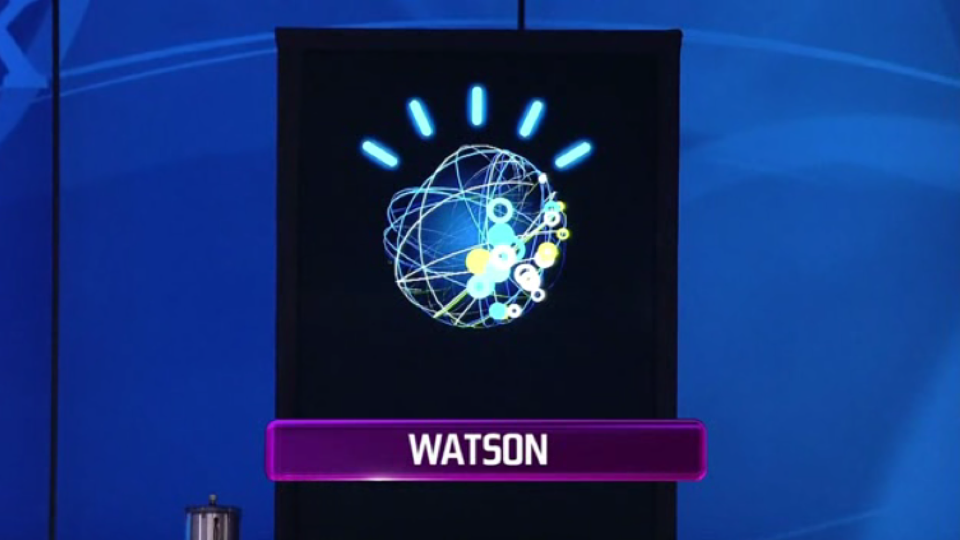
Smartest Machine on Earth


What is "machine learning"?
"Machine learning" is a branch of artificial intelligence that is concerned with the study of computer algorithms that improve automatically through experience. Watson by IBM uses "machine learning" in order to answer the Jeopardy questions without ever hearing the question before.


How did the IBM team employ that concept in the development of Watson's AI? What advantage did that provide over previous attempts at "intelligence"?
IBM employed the concept of "machine learning" in the development of Watson's AI by feeding Watson thousands of previous Jeopardy questions. They also fed Watson different forms of the same thing, for example the letter A. The letter can have many different forms and shapes.  Instead of letters, Watson is fed different forms of questions, Watson is better equipped to answer a question asked because it can reference the way something is worded, allowing Watson to imply things if needed. With all of the references that IBM has supplied Watson with, Watson is able to access all the information searching for information that relates to the question. It then "weeds out" the least likely, leaving the most likely answer choice. The Artificial Intelligence allows Watson to better find the most likely answer and learn from its mistakes. Watson is able to listen to the answers of his opponents and learn from the way they answered, whether it is right or wrong, and how they answered. In the video, a question is asked about what month a certain holiday is in. Watson answered that the holiday stated was a holiday. An opponent answered the question as a month, getting it correct. After hereing the same style of answer for times in a row, Watson was able to answer the next question, which was the same style, correctly. The "intellegence" that Watson has been given and allowed to build on makes Watson able to gain more information and intellegence the more it answers questions and hears questions answered. Watson has taken AI to the next level because up till now, no other technology could produce a machine anywhere near Watson.


I've often mentioned the term "Empirical Scepticism". What does that mean? How does that relate to the concept of Machine Learning? How does this relate to your life?
"Empirical Scepticism" is an attitude of doubt or a disposition to incredulity either in general or toward a particular object based on observation and/or experience. This relates to Machine Learning because Machine Learning is learning based off of previous information/experience. This relates to our lives because we live from experience, whether it is our own experience or other's.

Wednesday, January 4, 2012

Engineering Ground Zero


What different "trades" (types of construction work) are featured in this video? Name at least three.
1. Concrete

2. Landscape
3. Glass work
4. Piping
5. Steel
6. Electrical
7. Stone work
8. Coating
9. Thermal insulation
10. Firefighting facilities
11. Water facilities

What aspect of the project is most interesting to you? Why is that?
All of the ideas and innovations were interesting and inspiring. I found that the thoughts behind all of the work was very miticulous and new. Every aspect of the work being done rivaled each other for greatness, emotionally as well as in an innivative sense. The memmorial itself was an amazing idea, especially since it spoke to those effected and those who witnessed the event as well as everyone else. The building that is to the World Trade Center has, I believe, a very unique and tranquil design. The overall atmosphere of the environment pays great tribute to those who lost their life in the tragic attack. It seemed that everyone working on the site was giving their all for the cause. In other words, all aspects of the project were interesting to me because the reasons for the project had much meaning and the engineering that was used was innovative and impressive.

Friday, November 11, 2011

Professional Interview

Professional Background
a. Interviewee name: Ricardo Bazan

b. Interviewee’s specific degree: Bachelor Degree of Civil Engineer
c. Interviewee’s place of employment: self-employed, Banell Development
d. Interviewee’s email address: rbazan@banelldevelopment.com

Professional Interview


· Please describe your engineering field.
"Civil Engineering is the study of nature and how the humans, persons want to change that to put some buildings or infrastructures to serve the people. And along the way, how to make it safe, how you are going to influence nature, the land and the environment, how you are going to contain it if you need to. For example dams, culverts, or bridges, stuff like that. It is pretty broad."

· How long have you been doing this?
"About 10 years."

· What is your current job title? 
"Civil Engineer."
· Please describe your particular job and duties.
"Right now it varies a lot as I am more self-employed now, I have to do everything really. So that means i have to do the engineering portion of it, like designing, like doing plans, drafting plans and stuff like that, and also doing manager duties. And also getting clients. So I have to do marketing, I have to do marketing (going out there meeting people, going to seminars). So its pretty broad now. A civil engineer can have a  specific job. Most of the engineers are in design, or construction, or consulting. So, previously, my previous job, for example was basically all design. So, stay at the office and go through plans and design plans and prepare plans, but never actually went out to the field. Not supervising the construction process because that will be the job of another engineer, a field engineer. Civil engineer is very broad, sometimes you don't specialize in a lot of things."
· What is your average work schedule?
"Now I have a lot more flexible time, but I would say it starts around 9 o'clock in the morning and it can end probably 8 o'clock at night. Some days it starts at 10 in the morning and end, you know like, at 3 o'clock, 3 PM, depending on the day. If you get really busy, you work Saturdays and Sundays. For example, today is Friday and I'm drafting a plan, and I'm planning to do so after this meeting and its Friday night, you known, probably tomorrow I'm going to do the same thing. So it really depends."
· Starting with high school, describe your educational background chronologically.
"In high school, I did just regular high school stuff, like, umm, I always went well with the math. You know, obviously for engineering you have to do math a lot. Pre-calculus, and then calculus and then went to college and doing all the calculus and all the engineering work, physics, chemistry, biology ... what else is out there... ya, so, and then after college, that was it and then you graduate, well in college, obviously beside the core courses that I just talk about, you do the civil engineering classes. The basic stuff is, umm... surveying, class of surveying, a class of basic transportation, basic structural design, basic soil, soil is engineering, chemical engineering, water resources, hydrology, stuff like that. But then for me I specialized on transportation and water resources. Transportation we had to do a bunch of class on traffic and road design. So there's two different things, traffic is one thing, transportation is one thing [...] traffic is part of transportation but it is not the same thing. And the water resources is pretty broad also, you have to ... water resources has hydrology, which is is basically rain water and how you convey that in culverts and rivers and stuff like that, including dams. And then hydrology [hydraulics] is actually the physics of the water going over a certain infrastructure like pipes, and over a dam, or inside a channel, that's hydrology. So that's my expertise, hydrology, hydraulics, and transportation."


· If you had it to do over, related to your career or education, would you do anything differently?

"I think I would do it the same, the only thing, umm... probably I'll try to, maybe, if I had had the chance, I didn't really, is jump almost immediately after the bachelor go into a masters degree of some sort. But sometimes you are either not sure which masters you want to take, you know, when you graduate. You just did your bachelor, it is really a broad view of the whole engineering and it really doesn't specialize you in anything until actually you hit the work place. And I think if I had to do it again I would probably do the same thing. Just hit the work place, work for a couple years and then do the masters."
· And now, at this point of your career, would you know exactly, if you were going to do you masters, do you know what you would go towards? 
"Ya, actually, the masters, umm.. the funny thing is that, engineering is really good,umm... you can master it, the field that your in, in civil engineer for example water resources, just with work experience, you would master it. But civil engineering only takes you up to a point in the world business of the... so if i would do the master, actually I would to the MBA now instead of civil engineer master. The reason for that is that, umm... an engineer you move up the ladder, but it's extremely important once you hit a certain level after a few years of going up the ladder, a civil engineer, you start managing projects more, people more, business more. And none of that you have studied, you not ready because school you don't study any of that in the civil engineering profession, so an you only learn it at work, but sometimes, like engineering, you need the fundamentals, and that you get from school."

· What advice would you give to me as someone interested in pursuing a career path similar to yours? 
"If you like it, if you like the observing a lot of the natural occurrences of the world, if you like making a difference, umm... infrastructure for people for safety, I would advise you to go into it. But as far as advice you need to be dedicated, dedicated all the time, like I said, going to school to pursue engineering is difficult, it's not easy. And it's not the difficult as far as brain wise, but you have to be dedicated like study all the time, you know, sometimes you have a weekend were you go just study, you do homework instead of cram for exams for example. So you have to be dedicated. It's rewarding because you known that once you work and do things, you know that their going to be built and you see them and you can tell your friends, 'I designed that,' or I know how everything works around here, which is really cool."

·What college did you go to?
"San Jose State." Majored in Civil Engineering. No minors.

Words of Advice
- Since he owns his own business, Mr. Bazan stated that "At first your everything" and you learn that you "have to delegate" work. 
- He cautioned, "Don't be afraid of taking the long road."
- "Everything will click together" so just give it time
- "Double check everything."

Personal Reflection
a. What surprised you the most about the interview?
What surprised me was the concept of hydrology. I had no idea that it was so complex and present in everyday life to the extent that it is.
b. What was the most important piece of information that you learned from the interview?
All the information I learned from speaking with Mr. Bazan were all important in their own light. He may not have mentioned anything to this fact, but what he told me made me realize that the little things in life are superfluous to the bigger picture. The stress that may come out of work and other things are part of the road taken to success and reward. If you take school seriously and stay dedicated, you will come out with knowledge that will help you in many aspects of your life.
c. How has this interview influenced your feelings about your future career?
I believe that my feelings about my future career have been reinforced. All the information I have received from Mr. Bazan has increased my want to join the engineering field. It may not be easy, but it seems like a small price for the reward of success you earn. I believe that living life the easy way takes away from living.

Wednesday, November 9, 2011

Engineering Pranksters Wanted!

Design Challenge
Engineering Pranksters Wanted!
Seeking Ideas for Fun, New Cubicle Toys
Easier than 1 -2 -3!
  1. Sketch Your Idea! (Images of hand drawn sketches qualify.)
  2. Add a description!
  3. Done.
Click Here to Enter Now!
(Link to Sign Up)

Enter for a chance to win a Dell workstation with professional AMD FirePro graphics.

- Marshmallow-shooting rocket launchers?
- Gumball-tossing catapults?
- Paperclip-throwing cyborgs?
- Voice-responsive critters?

Show us your design creativity and engineering talent in DE's inaugural design challenge. Submit your ideas for a cubicle toy that's guaranteed to inspire, amuse, amaze, or annoy your coworkers, and you could win a Dell Precision™ Workstation with professional AMD FirePro graphics (retail value estimated at more than $5,000) that's guaranteed to make your coworkers jealous.


Sponsored by:

 Dell, AMD, DE

Saturday, November 5, 2011

"If Today Were the Last Day of My Life...


? - What three things from this talk resonate deepest with you? List each of these and give a brief explanation of why they are meaningful to you.

1. Connecting the Dots - This resounded deeply to me because life is made up of events that come together at the end. Everything we do leads to something we may not have expected. Life is full of surprises, but some of those surprises could be the result of choices you have made previously in your  life. As a teenager, life is still a new experience. I am learning everyday about practically everything. All of the choices I make now lead to what my life will be like in 5, 10, 20 years. And by that time, I will have made more choices that will affect the rest of my life. Trusting that the dots will connect together is hard. Steve Jobs said that you can only connect the dots in the past, the future is unknown. "... believing that the dots will connect down the road, will give you the confidence to follow your heart even when it leads you off the well-worn path, and that will make all the difference."

2. "If today were the last day of my life, would I want to do what I'm about to do today?" - You may not know it, but when you wake up, you are setting the pace for the rest of the day. The mood your in and the way you act are based on how you are in the morning. Steve Jobs said he asked himself every morning, "If today were the last day of my life, would I want to do what I'm about to do today?" This had meaning to me because this question is essential to knowing if you are living you life the way you want to. If your answer is no, then something in your life needs to be changes because that means you are not living the way you want to. Since I have not found what exactly I want to do, or love to do. So, going back to connecting the dots, my choices now will lead to how my life will be, I want to make sure my choices will lead to a positive future.

3. Find what you love to do, have courage to follow your heart, don't settle - Connecting the dots and the quote from response #2 both play a big part in my response to these thoughts from Steve Jobs' commencement speech. Personally, I want to live life to the fullest. I want to find what I love to do and pursue it. Also, I want to have the courage to follow my heart. I know my heart will lead me where I want to go, but first I have to trust it to connect the dots later in my life. Once I do that, my life will be filled with what I love and who I love. Not settling, I believe, plays a huge part in how we live our lives. When we start excepting things we never really want to, we start to lose our way and live the life we never wanted to. Not settling leads to following your heart, which leads to doing what you love.


All of the comments and ideas conveyed in Steve Jobs' commencement speech to Standford University were truly stellar. He gave many words of wisdom and was inspirational. Steve Jobs was truly an inspiration and one of the most premier innovators of the world. Thank you Mr. Steve Jobs for your innovation, inspiration, and wisdom. You will be missed and remembered.

Wednesday, November 2, 2011

Energy Sources!

Here are the slide to me PowerPoint Presentation on Solar Power


1. Describe one thing that surprised you about the energy source that you researched and presented.

What surprised me about Solar Power is that it storing the energy was somewhat hard. I know that using it and transfering it to a power grid is easy, but storingit is not as easy.

2. Describe one thing that surprised you about an energy source that another team presented.

Hydropower energy source surprised me. I hade no idea that it had so many negative environmental impacts. I thought it would be one of the safe, less harmful energysources. 

3. Describe and defend what you believe to be the most important technological need regarding energy.

I believe that Solar Power is an important and safe way to collect energy. It is, according to the information I have found out about energy sources, the safest way to collect energy. Although storing solar power is somewhat challenging, it is a small challenge to overcome to provide a safe and clean energy source.

Happy Halloween!

Happy Halloween!

In spirit of Halloween, I have created a famous face from the movies, Jack Scarrington, on AutoDest Inventor.


I also tried to make it more pumpkin like. So here is Jack Scarrington's head, with a pumpkin stem.


Hope everyone had a fun, safe, chocolate (or candy) filled Halloween!!

Thursday, October 27, 2011

Faro Scanner

My dad is a Professional Land Surveyor (PLS). He recently used a scanner that has just been introduced to America from Europe. He performed a survey in Riverside, CA at the Tyler Mall Galleria. The link is below. Scroll through the projects list until you see MND_10_5_11_Allen_Inst.

http://webshare.faro.com:8400/DebugTomcat/WebScene/WebScene.html

You may want to view this video about the technology also.
http://www.faro.com/usa/contentpages/colorscanner/lsvideo.aspx

Thursday, October 20, 2011

The 2nd Annual CHS Cardboard Canoe Challenge!

The total number of achievements I earned in this challenge is: 15 (16 with Big Brain)

Design Achievements
Define the Problem and Brainstorm Solutions
(State the problem you are designing a solution for. List at least 20 ideas you have regarding your solution.)

Also

Big Brain
(The individual student with the most brainstorms listed will earn a bonus achievement.)

Problem: Build a cardboard boat that can travel the distance of the pool (25 yards.)
  1. maximize weight distribution using large amount of surface area touching water
  2. minimize water resistance by building a pointed bow
  3. maximize buoyancy by using air pockets in cardboard boxes and lowering the weight
  4. optimize duct tape use efficiency by coating the parts touching the water before other areas
  5. duct tape the inside of the boat
  6. prevent drag by lowering possibility of wet cardboard
  7. use of a flat bottom for weight distribution
  8. use higher walls to prevent splashing and sinking
  9. obtain duct tape from The Home Depot by being sponsored
  10. base design off of effective real world boat designs
  11. maximize efficiency by spreading out the workload over the entire team
  12. reinforce structure with form of propulsion kept in mind
  13. cut cardboard precisely to reduce weight
  14. build the boat with sailor in mind (Connor Heise)
  15. Prevent possible leaks by using multiple layers of duct tape at stress points and corners
  16. use box shape to create structural stability, and overlap corners to hold the vessel's stability
  17. select air filled cardboard parts to maintain buoyancy advantage
  18. prevent sagging by using multiple layers of structure,
  19. optimize use of class time by working together as a group
  20. optimize use of duct tape by minimizing overlap, while keeping enough of an overlap to prevent leaks
  21. place floats in needed locations
  22. create The Home Depot sign for sponsor
  23. keep waste to a minimum
  24. build a design that will keep the workspace relatively clean
  25. optimize time use by measuring all pieces before cutting
  26. don't cut on the floor or tables, put something underneath the item you are cutting
  27. have a finished idea before you start building

Criteria & Constraints
(List or reference the specified Criteria and Constraints you're designing for. List at least one implied criteria. List at least three implied constraints.)

Criteria 
  • Build a watercraft that allows you to traverse the CHS swimming pool.
  • Your "boat" must float at least one student through the course of the competition.
  • Protect your workspace from damage!
  • Implied - keep your working space clean

Constraints
  • You may only use Cardboard and Duct Tape for this event.
  • All Staples or other foreign material must be removed from your cardboard. If we trash the pool, we will not be invited back for other activities during the year (yes, we have other activities in mind for 2nd semester).
  • Cardboard must meet our quality standard and be approved by the instructor (more info to follow)
  • Each boat must have a minimum of a 3" tall "sidewall" (no completely flat designs).
  • All exposed cardboard must be covered in duct tape (this will reduce cardboard disintegration in the pool).
  • Each team will be provided one "versa table" cardboard box piece and two 60yrd rolls of duct tape. Any materials beyond this (likely need more cardboard) need to be resourced by your team.
  • Implied - finish constructing boat under given time
  • Implied - all members of the group must participate in the construction of the boat
  • Implied - must keep your working area clean

Sketch Ideas
(Draw 3 different sketches for possible designs. Label at least 3 key features for each sketch. Describe the feature's functionality so a viewer understands why the called out feature is important.)


Prototype Ideas
(Craft physical prototypes (models) of each of your three sketches. Use a note card or post it note to call out at least one key feature on each model. Post the images to your blog and describe the key feature that you've pointed out on each.)


Select an Approach
(Generate feedback (+, change, ?, !) and make a decision matrix regarding your sketches/prototypes. Specify the approach you've chosen and justify your selection.)


Build Achievements:

Build It!
(Build your watercraft. Document it with a presentable photo)

We built our watercraft under the listed constraints and criteria.


Test Achievements

The Fastest - (Awarded to the first team to reach the far side (25yds))

Our boat traveled the faster to the other side of the pool.

The Farthest - (Awarded to the team that can travel the furthest (laps))

Our boat tied for 1st place in this achievement for traveling the farthest (8 laps).

The Longest - (Awarded to the team with the watercraft that floats the longest (multiple teams may be awarded this achievement if multiple boats remain afloat at the end of our competition period))

Our boat, along with another group's boat, remained afloat for the extent of the competition.


Balance Master - (Awarded if you can have at least one person stand for 5 seconds in the boat (you must conduct this away from the edge of the pool so that non one falls over and hits their head))

I was able to balance myself in our boat for the duration of 5 seconds without tipping or sinking.

Videographer - (Take video of the challenge and post to your blog.)

Here is a video of our boat on race day.


Reflection Achievements:

Feedback
(Generate ten items of feedback for your effort (from the design/build process and/or the actual product). Make sure you include at least one item of feedback in each of our four feedback areas (+, change, ?, !))

+
1. very buoyant
2. able to travel quickly through water
3. more than capable of holding 130 lbs. plus

Change
1. tape the inside of the boat
2. take off the side air-pockets

?
1. What is the point of having the side air-pockets?
2. What is the advantage of having a flat bottom?

!
1. cover more of the top with tape, less water can get in
2. check for holes and tapes mishaps thoroughly

How Low Did You Go?
(How low in the water did your canoe sit (roughly)? Was it surprising how little your boat went down in the water? What is the unit weight of water in pounds? How much did your pilot weigh (roughly)? Use math to help explain the depth that your boat sat in the water.)

Our canoe sat a good 3+ inches in the water.
It was quite surprising how little our boat went down.
The unit weight of water in pounds is 62.43 lb/ft cubed.
Our pilot (Connor Heise) weighed 128 lbs. roughly.


Redesign
(If we were to do another Carboard Canoe race next semester, what would you build? Draw from everything you experienced in your class and propose the most competative solution. Include a sketch with key features and dimensions labeled.)

If I were to build another canoe for the 3rd Annual Cardboard Canoe race, I would build a boat similar to the one we built.


(Make Your Own Achievement)
(Make an achievement of your own design that you can award yourself for something awesome your team did.)

Rack Up Those Points! - The group that obtains the most points in the blindfolded, kick-board finding game get this achievement.

**USS IHopeIFloat obtained 8 points in the blindfolded, kick-board finding game. The most out of our period.